
A low scoring college football game is still more exciting than a high scoring soccer game.
Category: Uncategorized
-
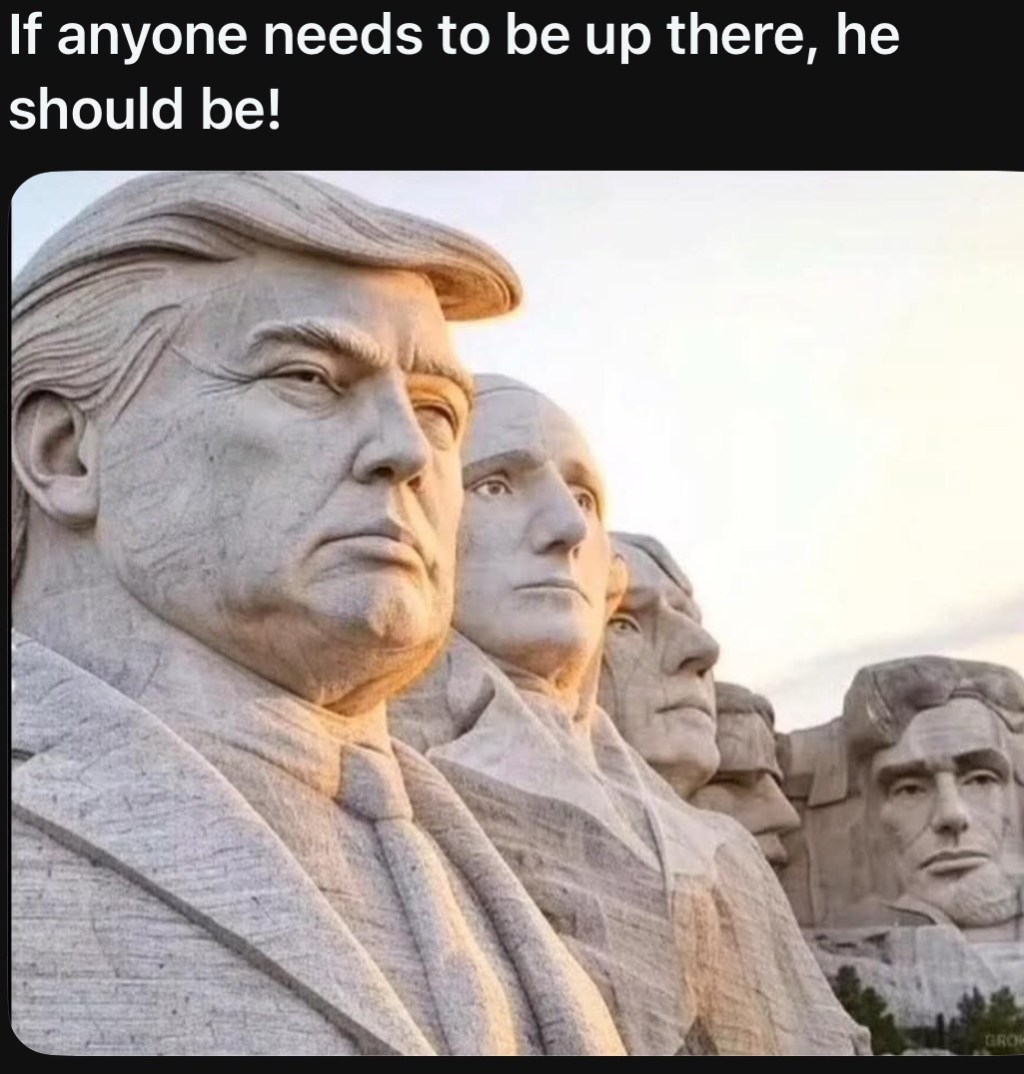
It’s Not About the Economy, Stupid
It’s Not About the Economy, Stupid
by Gene Johns
In May, reporters asked President Donald Trump whether Americans’ financial situation was a factor in his negotiations with Iran. Trump reportedly responded that he was not thinking about Americans’ financial situation “even a little bit” when making decisions regarding the conflict and negotiations. His stated focus was preventing Iran from obtaining nuclear weapons and addressing what he viewed as national security concerns.
Liberals and Democrats quickly criticized President Trump’s statement that he was not concerned about the economy when dealing with Iran. Some interpreted his remarks as meaning that he does not care about Americans. In my view, that interpretation is incorrect.
President Trump was right to say that concerns about the U.S. economy should not dictate his actions toward Iran. Why? Because allowing economic considerations to limit his response could weaken efforts to achieve the primary objective—eliminating the threat posed by a nuclear-armed Iran to the United States and its allies.
Why do many liberals and Democratic leaders criticize President Trump for his remarks? In my opinion, some oppose him regardless of the issue and are unwilling to acknowledge his successes, even when those successes could benefit the American people.
-
Flag Burning
Flag Burning
by Gene Johns

In my opinion, while offensive to me and many others, burning the American flag in protest is an expression of speech and is therefore protected by the First Amendment of the U.S. Constitution.

When I express my opinion about flag burning, I often receive angry pushback and personal insults. I understand the reaction, but I stand firm in my view. Why? Because I value the freedoms the flag represents more than the symbol itself.

After all, burning a flag changes nothing and physically harms no one, provided the flag being burned is not mine, stolen from someone else, a flag of historical value, or a flag flying above federal, state, or local government buildings. Burning any of those previously listed flags would be a crime.

The U.S. Supreme Court has ruled that flag burning is protected symbolic speech under the First Amendment.

In the 1989 case Texas v. Johnson, the Court ruled 5–4 that Gregory Lee Johnson’s act of burning an American flag during a political protest was expressive conduct protected by the Constitution, even though it was deeply offensive to many Americans. The Court emphasized that freedom of speech protects even offensive expression.

In 1990, the Court reaffirmed this position in United States v. Eichman, striking down a federal flag protection law passed after the Johnson decision. The government itself conceded that flag burning constitutes expressive conduct.

On June 22, 2005, the United States House of Representatives approved a constitutional amendment that would have given Congress the power to prohibit the desecration of the American flag, including flag burning. On June 27, 2006, the amendment failed in the U.S. Senate by a single vote.

Fortunately, a majority of Senators agreed with me and valued the freedoms the flag represents more than the symbol itself.

Our Constitution does not protect us from actions or words that insult or anger us. If it did, I would invoke that constitutional protection to silence Barack Obama, Joe Biden, Chris Matthews, Rachel Maddow, Jon Stewart, CNN, NBC, ABC, CBS, and countless other political pundits whose rhetoric often infuriates me.

First Amendment protection is not limited to “pure speech,” such as books, newspapers, or spoken words. Symbolic speech, or nonverbal expression, such as flag burning, is also a form of protected speech. The very act of burning the American flag is a clear demonstration of one’s right to freedom of expression. To prohibit such action would violate the First Amendment of our Constitution.

However, there is something else to consider. If flag burning incites violence, then the individual responsible should be arrested for inciting violence or rioting—not for the specific act of burning the flag itself. In that case, I believe flag burning should be prohibited only when it is clearly intended to provoke violence or civil unrest.

That reminds me of an old argument concerning freedom of speech. One has the right to free speech, but that does not mean a person can falsely yell “fire” in a crowded theater when there is no fire. Such speech is intended to create fear and chaos and therefore is not protected.

The Supreme Court once wrote that freedom is “the matrix, the indispensable condition of nearly every other form of freedom.” By that definition, freedom would undoubtedly extend to citizens the right to burn Old Glory.

A few years ago, I noticed the Stars and Stripes flying above a post office that was faded and torn. In my opinion, that was more offensive and insulting than some disrespectful degenerate burning an otherwise insignificant flag.

Perhaps Congress should pass a law requiring the U.S. Postal Service and other federal, state, and local agencies to ensure that any American flag they display is kept in good condition. Flying a torn and faded Old Glory above government buildings is an insult to our heritage, disrespectful to our citizens, and, in my opinion, worse than burning a flag in protest. -
Best Country Music Playlist
Looking for real country music?

Essie Country’s 2026 Real Country Songs of the Week playlist on YouTube brings together some of the very best traditional country songs released today—featuring steel guitar, fiddle, heartfelt storytelling, and the kind of country sound Nashville too often ignores.

From rising independent artists to overlooked traditionalists, this playlist is dedicated to preserving and promoting real country music the way it’s supposed to sound.

If you miss the days when country music actually sounded country, this playlist was made for you.

🎶 Listen here:
https://youtube.com/playlist?list=PLGJjqJTu_SjN9T2m9SHmq_wtHlIs2nm0p&si=wCNa1FJPjBhJh-ZQ -
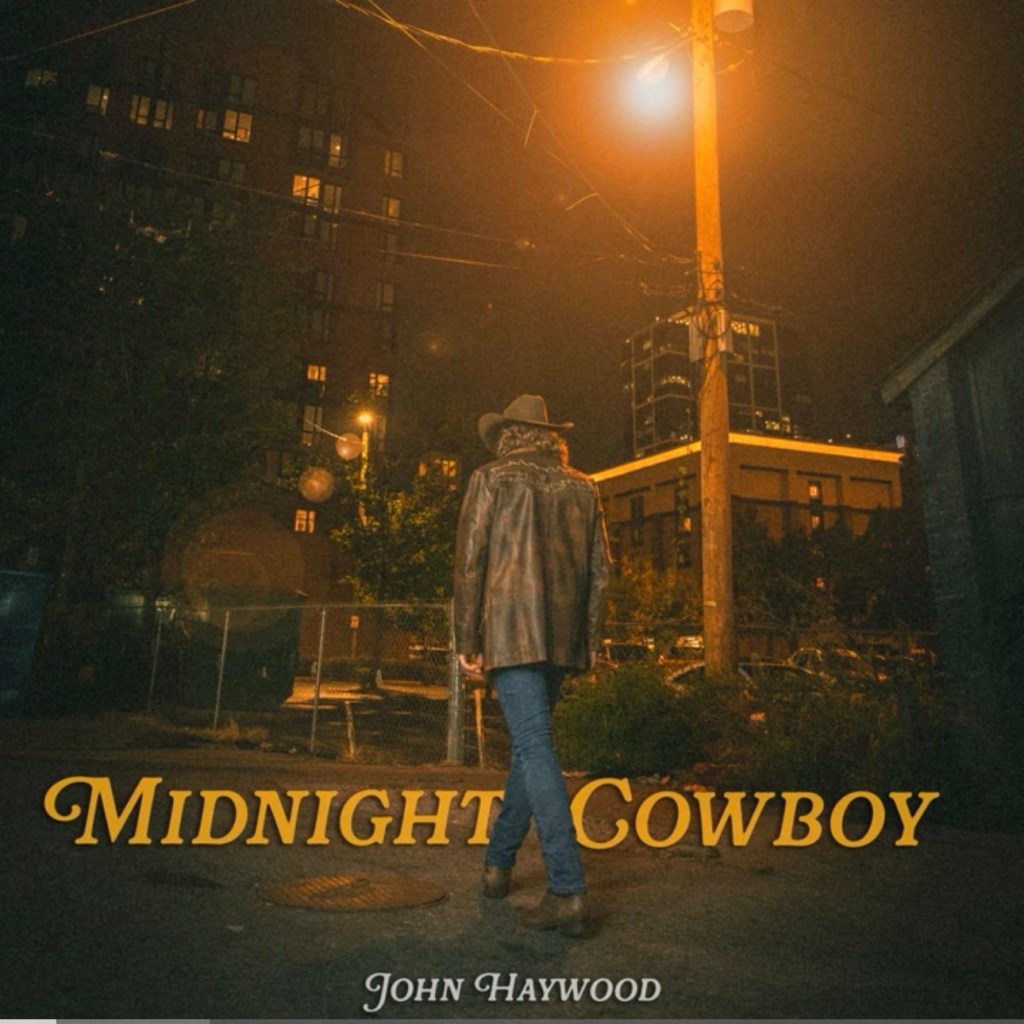
Midnight Cowboy
Midnight Cowboy
Released 09/13/2024
by John Haywood
(Source Spotify)

Intro by Gene Johns

I’m always looking for “real” country music—and it appears John Haywood is too. His song “Midnight Cowboy” tells the story of a search for traditional country sounds that Nashville seems to ignore.

With Nashville bars playing the same ole “fake” country heard on the radio, he searches for a DJ he calls the “Midnight Cowboy,” playing the sounds of Willie, Waylon, and Haggard. Instead, he finds empty dance floors and closed honky-tonks—places where that music once lived.

This up-tempo chronicle of real country music’s decline offers a refreshing look at where the genre stands today. This song has energy, creative insight, and a memorable melody, all coming together in a well-crafted song.

John may not have found his Midnight Cowboy—but Essie Country has. “Midnight Cowboy” by John Haywood is this week’s Essie Country’s Real Country Song of the Week. You can find it by clicking the link below.

Midnight Cowboy
by John Haywood
     ⬇️
https://youtu.be/roDAaIiYNqk?si=mZ5hQCZqdlMW50hN

Essie Country—promoting country music, the way it’s supposed to sound. -
Off the Charts
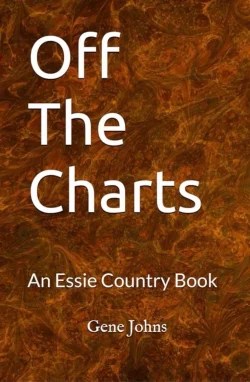
Country music has changed. This book explains what got left behind.
Off the Charts is Gene Johns’ answer to today’s mainstream country scene—a collection of songs and artists that never made the playlists, never topped the charts, but never abandoned what makes country music real.Built from the Essie Country “Song of the Week” series, this book highlights music rooted in tradition—steel guitar, fiddle, storytelling, and voices that sound like country, not something borrowed from another genre.
These are the songs Nashville ignores.
These are the artists radio doesn’t play.
These are the tracks that still sound like country music.
If you’ve ever wondered where the real country music went—this book shows you.Now available on Amazon–to view on Amzaon click HERE
Essie Country—real country music, the way it’s supposed to sound. -
Country Off the Charts
An excerpt from my book:
Off the ChartsBefore we get to the songs, we need to talk about the state of country music today. Because if we are being honest, a lot of what’s called “country” now wouldn’t have made it past the front door years ago
The Roots of Country Music
On November 28, 1925, George D. Hay—an announcer and program director for Chicago’s WLS radio station and its National Barn Dance program—introduced Nashville to its own version of the Barn Dance on WSM Radio. That program would eventually become the Grand Ole Opry, establishing Nashville as the center stage for country and western music and anchoring the country music industry that grew there. From that point forward, Nashville became the heart of country music.
Country music has evolved significantly since the early days of the Opry. Nashville helped bring the fiddle, steel guitar, and the unmistakable twang of Southern artists to a national audience. Today, however, Billboard’s Hot Country Songs chart no longer reflects the talent and musicality of traditional country music. Instead, what I call “fake” country has dominated the chart—and much of the industry—for the past 15 years.
What “Off the Charts” Really Means
The phrase “off the charts” usually describes something exceptional—something that exceeds expectations and stands above the rest. But that is not how I use it here.
Today’s Hot Country Songs chart is filled with music that borrows heavily from pop and hip-hop. This shift is not accidental. It reflects a deliberate effort by industry executives and producers to reshape country music by blending it with more commercially successful genres. I understand the business side of that decision—pop and hip-hop sell. But the result is that many outstanding traditional country artists are left off radio playlists, and in turn, kept off the charts.
Defining Pop, Hip-Hop, and Neotraditional Country
Before going further, it’s worth defining what I mean by pop, hip-hop, and neotraditional country music.
Pop music is a broad, ever-evolving genre designed for mass appeal. It typically features a strong, danceable rhythm, repeated hooks, and a familiar verse-chorus structure. Modern pop often relies on
electronic production, including synthesizers and programmed beats, and frequently blends elements from other genres such as rock, dance, and even country. At its core, pop music is defined by its wide audience and commercial accessibility.
Hip-hop is a rhythm-driven genre built around lyrical delivery, most commonly in the form of rap. It combines spoken or chanted lyrics with beat-based production and emphasizes flow, timing, and expression. Hip-hop can reflect a wide range of themes, including personal experiences, storytelling, social commentary, and entertainment, all delivered over a strong rhythmic foundation.
Neotraditional country is a style of country music that deliberately returns to the sound, instruments, and storytelling of classic country (1950s-1960s) while still being recorded and produced in a modern era. It is modern music that sounds like real, traditional country—built on twang, steel guitar, fiddle, and honest storytelling—rather than pop, rock, or hip-hop influences.
What Country Music Is—and Isn’t
Country music, by contrast, has its roots in the rural Southern United States. Traditionally, it combines storytelling with melody and is supported by instruments such as the fiddle, guitar, and steel guitar. A true country song highlights vocal authenticity, emotional honesty, and an immediately recognizable sound.
In its early years, country music also embraced Western ballads—giving rise to the term “Country and Western.” Over time, that label was shortened, and Western ballads largely disappeared from the mainstream.
A close look at today’s country radio and television reveals just how strong the pop and hip-hop influence has become. The fiddle and
steel guitar are often missing. The twang is softened—or gone altogether. In their place are pop vocal phrasing, electronic production, and sounds that would be more at home on a Top 40 pop chart.
The Industry Shift
I don’t necessarily blame the artists. The industry is a business, and its goal is to generate revenue. I understand that. But if this hybrid
sound is what the industry wants to promote, then call it what it is. Create a new genre—call it pop country, or something else entirely—but don’t pass it off as traditional country music. And don’t let it dominate country radio, Billboard’s country charts, or define the genre.
Despite this shift, many legitimate country artists are still producing outstanding traditional music. You just won’t hear most of them on mainstream radio. They can be found instead on platforms like Spotify, iTunes, iHeartRadio, and Amazon Music. In fact, I’ve compiled a list of more than 500 real country artists, included later in this book.
Meanwhile, today’s mainstream version of “country” continues to be promoted by organizations like the Academy of Country Music, Country Music Television, and the Country Music Association as the best the genre has to offer. In my view, that is a misrepresentation—and a betrayal—of traditional country music.
A Clear Example
Take Carrie Underwood as an example. After winning American Idol, she rose quickly to stardom and became one of the most successful artists in the genre, with numerous number-one hits and massive commercial success.
There is no question about her talent or success. But aside from a few songs like “Jesus, Take the Wheel” and “Before He Cheats,” much of her catalog leans heavily toward pop. In that sense, she represents the shift in country music—what I see as a departure from its traditional roots.
And she is not alone. Artists such as Sam Hunt, Russell Dickerson, Kane Brown, and Dustin Lynch, among others, have contributed to this transformation. Their music may be successful, but it has also helped redefine what is labeled as country.
Finding Real Country Today
I stopped listening to country radio years ago because of this shift. Instead, I’ve turned to streaming platforms, where I’ve discovered a wealth of genuine country talent—often long before the industry takes notice.
Artists like Lainey Wilson and Cody Johnson were on my radar before they gained wider recognition. And there are many more worth discovering, including Zach Top, Randall King, Mo Pitney, Jake Worthington, Brandy Clark, Ben McPeak, Catie Offerman, and William Michael Morgan, among many others.
I will continue to search, listen, and support the kind of country music that stays true to its roots—the kind of music that may never top the charts, but in every meaningful way, remains off the charts.
Off The Charts is available on Amazon. To view the book, click on
Off The Charts -
The High Cost of Gasoline
Trump, Iran, and the Price Americans Must Pay
by Gene Johns
Wow! Gas prices are near record highs, and many people say it is a direct response to President Trump’s conflict with Iran. And to think—I voted for him three times!
Okay, that should get liberals and Democrats excited and riled up. But now let me explain my take on today’s high gas prices. By the way, President Trump is doing a great job.
Today’s gas prices, as we all know, are approaching the record highs Americans endured during the Biden presidency. But there is a major difference between the causes—and why one situation is more understandable than the other. And no, it’s not because I’m a huge Trump supporter or a MAGA conservative. It’s because of critical thinking.
The record-high gas prices and inflation during the Biden administration were largely driven by domestic policies and out-of-control Democrat spending during the first two years of his presidency. That is not merely a partisan opinion—it is well documented.
Biden and the Democrat-controlled Congress passed the American Rescue Plan, the Infrastructure Investment and Jobs Act, and the ironically named Inflation Reduction Act. Those massive spending measures contributed to inflation and rising energy prices. Biden’s inflation and high gas prices were largely self-inflicted, unforced errors.
Before the Iran conflict began, inflation and gas prices had started to decline. Trump’s policies, the reversal of Biden-era directives and executive orders, and renewed American energy production helped bring fuel prices down and reduced inflationary pressure.
Then President Trump escalated the long-running conflict with Iran—a conflict that, in many ways, began in 1979 following the Islamic Revolution and the seizure of the U.S. Embassy in Tehran on November 4, 1979, when Iranian militants held 52 American diplomats and citizens hostage for 444 days.
That event marked the beginning of decades of hostility between Iran and the United States. Iranian leaders and Iran-backed groups have repeatedly targeted Americans and American interests.
While estimates vary, hundreds of Americans—and possibly more than 1,000—have been killed by Iran or its proxies since 1979. Among the deadliest attacks were:
• 241 U.S. service members killed in the October 1983 Beirut barracks bombing carried out by Hezbollah, an Iran-backed terrorist group.
• 17 Americans killed in the April 1983 bombing of the U.S. Embassy in Beirut.
For decades, presidents from both parties avoided direct military confrontation with Iran. President Trump chose a different path.
Perhaps the most significant reason for confronting Iran was the threat of Iran obtaining nuclear weapons. With radical religious leaders controlling such weapons, Trump believed military action was necessary to prevent a potentially catastrophic future attack against the United States or its allies.
That decision has consequences, including higher gasoline prices and renewed inflationary pressure. But unlike the inflation caused by domestic economic policy during the Biden years, these economic effects are tied to national security and military conflict.
History shows that wars often bring economic sacrifice for Americans.
During World War II, Americans dealt with gasoline rationing, long lines at stations, limits on pleasure driving, lower speed limits, tire shortages, and restrictions on the purchase of new vehicles.
One might argue that World War II was a global war, not a regional conflict. Fair point. But even the Korean War brought economic pressures at home.
Gasoline prices increased during the Korean War, though not to the levels seen during World War II. Americans also experienced:
• Higher prices for cars and appliances
• Delays in the availability of consumer products
The bottom line is this: higher gasoline prices and rising inflation are part of the economic cost Americans may have to endure to confront what Trump and his supporters view as a serious national security threat.
Not only is it a cost we can endure—it may be a cost necessary to secure America’s future safety.
The conflict with Iran, supporters argue, is intended to protect the United States and reduce a long-term threat. If that comes with short-term economic hardship, many Americans believe it is a sacrifice worth making for future generations.
Sometimes freedom and national security come with a price—not only in lives lost, but also in economic hardship. President Trump understood that when he decided it was time to act.
It is time for Americans, regardless of political affiliation, to recognize the seriousness of the threat posed by Iran and to understand why President Trump believed military action was necessary, despite the economic consequences.
“Leadership is tested when the consequences are difficult.”
-
The “F” Word
The “F” Word
In recent years, I have noticed that profanity, especially the explosive use of the “F” word, has become a common practice by many, including politicians, singers (especially rappers), comedians, women, and, sadly, teenage girls. Just in case you don’t know which “F” word I am talking about, yes, it’s the one you might think. It rhymes with duck.
I spent nearly 22 years in the U.S. Air Force, including six weeks of basic training. I spent about the same number of years bowling in men’s leagues and participating in men’s bowling tournaments. I worked in a state prison for a year and a half, surrounded by inmates.
All of those environments are known for the freestyle use of four-letter words. So, it’s safe to say I do not have virgin ears. Over the years, I have been around a lot of unfiltered language.
An old saying goes like this: Sticks and stones may break my bones, but words will never hurt me. That saying could not be more wrong. Yes, I think using words like the “F” word and other words of profanity in our everyday conversations does hurt people. Not physically, but in terms of respectability and reputation, because it hurts the respectability and reputation of the one using such language.
I cringe every time I hear a man use the “F” word in mixed company or when it’s used around children or senior citizens who are not used to such language. For me, it shows a lack of class. Athra Albattat, a mental health counselor, states that class is how a person presents themselves to the world. The way they speak is a major factor in class. In my opinion, a classy person has a clean, expansive vocabulary, free of profanity.
I am reminded of what someone once said to a teammate of mine about me. He told my teammate, “Gene has too much class for this league.” I’m not sure what he meant by that, but I seldom used profanity, and when I did, it was probably “dammit,” and I was bowling in a league with a bunch of rowdy guys.
I did not tell you that to elevate my reputation, or to show that I think I am better than anyone else. I use that as an example of how one’s reputation can be tied to what one says or what one doesn’t say in public.
I think one reason the “F” word has become popular to use is that the “F” word is an extremely versatile word. Using inflection with the “F” word gives it many different meanings. It can mean approval, disapproval, agreement, happiness, sadness, anger, astonishment, agreement with, and other connotations simply by how the word is said.
The “F” word is probably the most versatile word in the English language, but that doesn’t mean it is said without a cost. It cheapens language, insults dignity, and diminishes respect.
I recently watched a few episodes of the television series “Yellowstone.” I heard great things about that show, so I wanted to see what all the hoopla was about that show. What caught me by surprise while watching “Yellowstone” was how much profanity there was in a regular public TV broadcast.
The “F” word and other profanities are plentiful in the “ Yellowstone” television series. We have come a long way from the days of the Andy Griffith Show and Archie Bunker, and I don’t think that is a good thing.
I know things change. Our society is smoking less, communicating more, and accepting different lifestyles without prejudice. All of those are good things. But, as a society, we have become indifferent to the classless use of profanity, particularly the “F” word, in public and in mixed company.
I also know that open profanity and the common use of the “F” word are here to stay. But class and respect are still virtues, and perhaps someday, class and respect will govern the flagrant use of the “F” word.
This commentary is not meant to lambaste those who choose to use the “F” word as a common language. Shazam, I’m just giving you, my perspective.
 Gene-ology.com